Electric Skateboarding and Surfing
Keep honing your surf skills when the ocean is flat
Electric skateboarding allows you to practice the fundamentals of surfing without waiting for waves: vision, shoulder rotation, hip placement, leg flexion, and weight transfer. With consistent speed, you can repeat your turns and refine your stance without having to push like on a classic skateboard or pump like on a surfskate.
Since propulsion is managed by the remote control, you can focus on your stance, body engagement, and the consistency of your lines while riding.
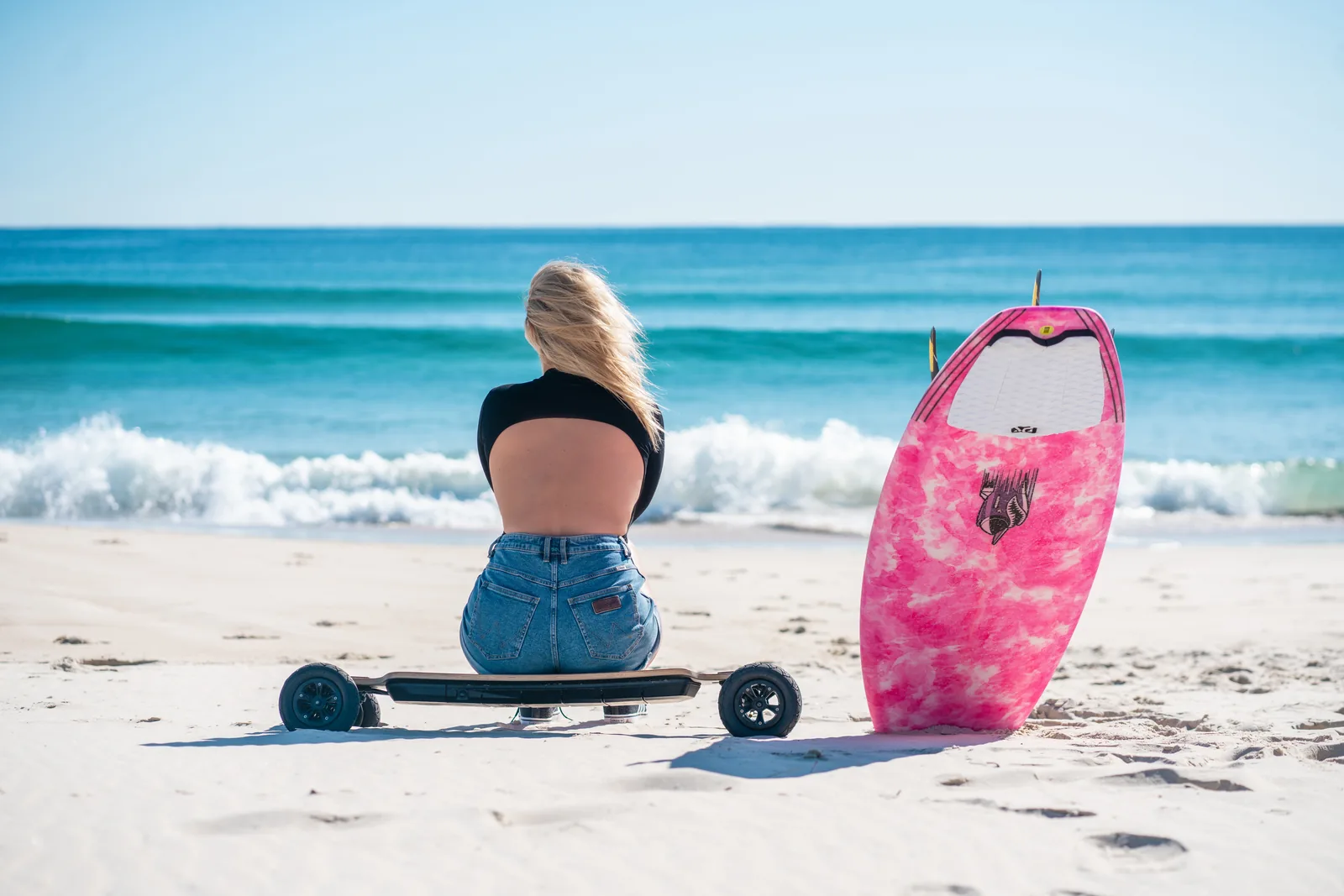
From Surf to Skate, Then Skate to Surf
Skateboarding evolved from the Californian surf scene. Surfers attached roller skate wheels to wooden boards to keep gliding when the waves weren't cooperating. Originally, skateboarding was literally a way to surf the asphalt.
The connection didn't stop with the object itself. The style of turns, the attitude, the imagery, the music, and the love of free progression flowed in both directions. Skateboarding became its own discipline, but the body movements remain close to those used in surfing.
On water as on asphalt, fluidity comes from your gaze, body placement, and mastery of trajectory.
When the two disciplines advance each other
Surfing nourished the style of skateboarding, then skateboarding pushed the possibilities of modern surfing.
Surfing on Asphalt
In the 1950s and 1960s, Californian surfers rode handmade boards when the waves were bad. The first brands adopted shapes and an aesthetic directly inspired by surfing, a lineage traced by HISTORY.
The Ollie Changes Skateboarding
The Skateboarding Hall of Fame credits Alan Gelfand with the first vertical ollie in 1977. Rodney Mullen then adapted the movement to flat ground in 1982. The board leaves the ground without being grabbed, opening up a new generation of tricks.
Airs Enter Surfing
In the 1980s, Christian Fletcher was among the surfers who brought an aerial approach heavily influenced by skateboarding. The Los Angeles Times highlighted the importance of this influence in modern surfing.
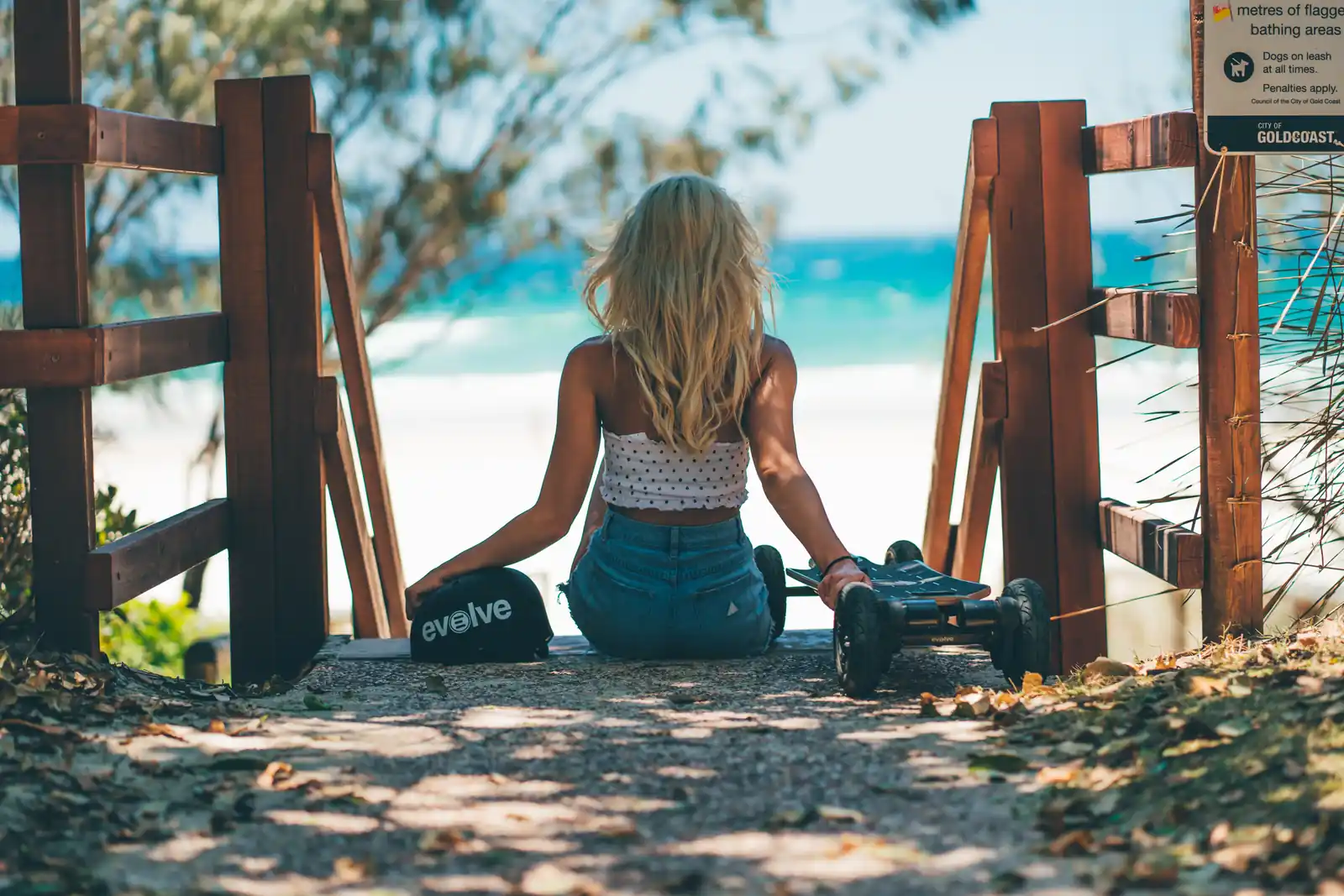
A Turn Starts with Your Gaze
To turn effectively, the movement begins with your gaze: look at the exit of the turn, then your shoulders and hips will naturally follow the chosen direction.
This is one of the most useful transfers to surfing. Fixing your gaze on the nose or looking at your feet closes off your trajectory. Looking at the next section of the wave helps your body naturally organize itself.
Look where you want to go: your body and the board will follow more naturally.
Eyes, Shoulders, Torso, Hips, Knees, Feet
Practice the order of movement at moderate speed before seeking more angle.
Your Eyes
Spot the exit of the turn and keep your gaze far enough ahead to anticipate.
Your Shoulders
Gradually steer them in the chosen direction, avoiding sudden movements.
The Torso
Let your upper body follow your shoulders instead of remaining rigid.
The Hips
They transmit rotation to the board and manage weight transfer.
The Knees
Bend to absorb, compress before the turn, and gradually rise on exit.
The Feet
They refine heel or toe pressure. They complete the movement; they don't create it alone.
Balance and Proprioception
- Stabilize your torso during a weight shift
- Feel the weight distribution between your legs
- Stay relaxed on a moving board
Carving and Trajectories
- Link frontside and backside turns
- Choose an entry and exit point
- Make turns more progressive
Consistency
- Repeat without waiting for swell or tide
- Perform ten identical attempts in minutes
- Build muscle memory between surf sessions
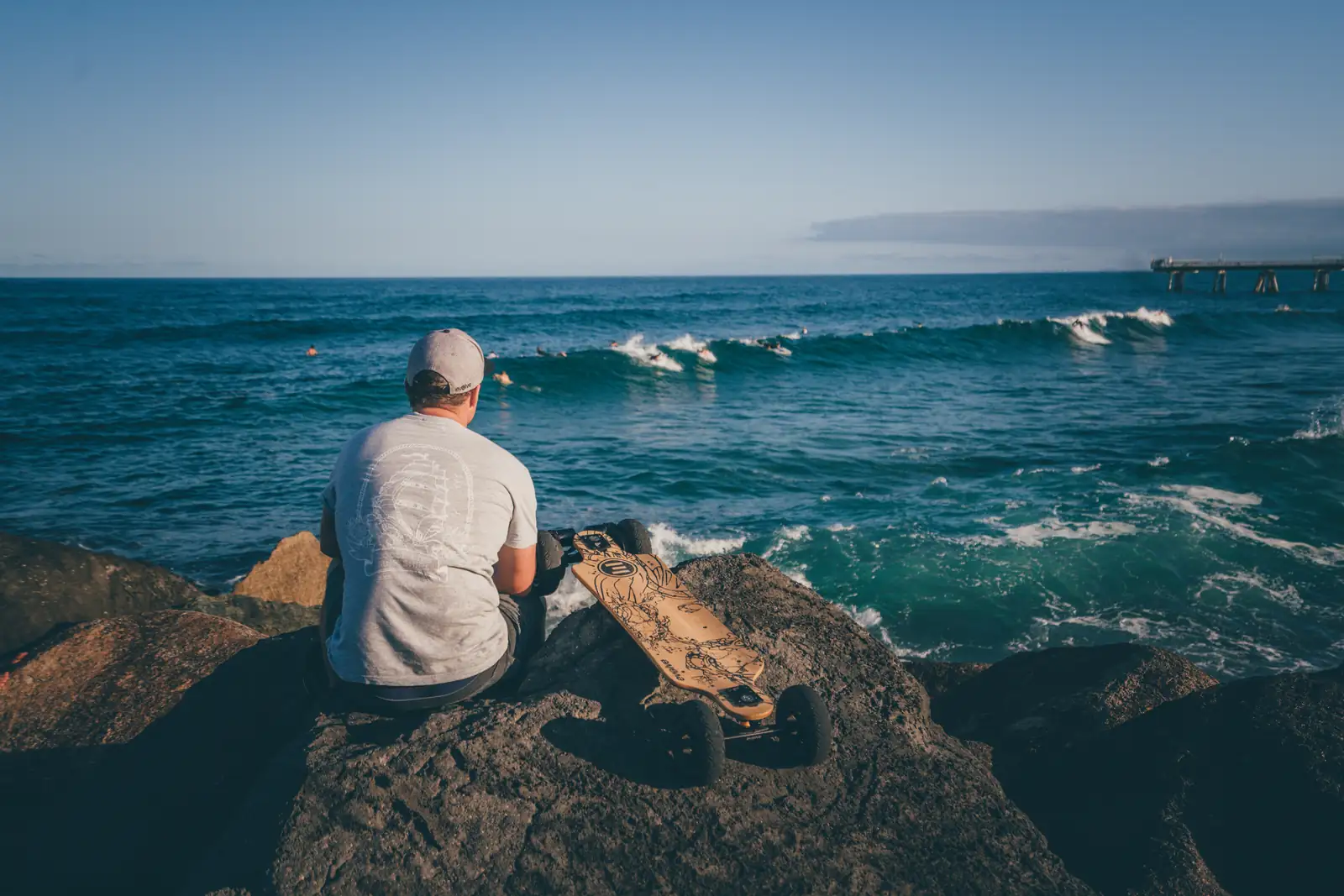
What electric skateboarding does not replicate
A wave is alive, angled, and accelerates underfoot. Asphalt is static. Skateboarding doesn't train paddling, take-offs, peak positioning, swell reading, duck diving, or adapting to a closing section.
The remote control provides propulsion, so you don't have to break your stance to push like on a classic skateboard, or constantly pump to maintain speed like on a surfskate. You can fully concentrate on your posture, your gaze, shoulder opening, hip engagement, and how your whole body accompanies the curve.
Use the skateboard as a technical complement, not as a copy of the ocean.
Surfskate, Classic Skateboard, or Electric Skateboard
The surfskate primarily focuses on speed generation. The classic skateboard develops balance and tricks. The electric skateboard maintains a consistent pace to observe and correct your position throughout the entire curve.
| Support | Main Focus | Strength | Limitation |
|---|---|---|---|
| Surfskate | Pumping, compression, tight turns | Articulated front truck, surf-like feel | Less stable at high speed |
| Classic Skateboard | Balance and tricks | Very educational and lightweight | Pushing regularly interrupts the riding position |
| Electric Skateboard | Long carving, gaze, line, body position | Consistent speed to focus on technique | Does not replicate surfskate pumping |
Example Session: Thirty Minutes to Work on Your Surf Style
One possible format, adaptable to your skill level, on a wide, clean, smooth area closed to traffic.
1. Warm-up, 5 minutes
- Ride slowly in your natural stance
- Bend and straighten without changing your line
- Check braking, terrain, and protective gear
2. Vision, 5 minutes
- Place two markers a distance apart
- Look at the second marker before reaching the first
- Keep your head steady and arms relaxed
3. Wide Eights, 10 minutes
- Carve wide figure eights at a moderate speed
- Follow the sequence: eyes, shoulders, hips
- Aim for symmetry in frontside and backside turns
4. Compression, 5 minutes
- Gradually descend before the pivot point
- Keep your knees aligned with your feet
- Gently rise out of the curve
5. Imagined Line, 5 minutes
- Imagine a bottom turn, then a return to the lip
- Change rhythm without sudden acceleration
- Finish each trajectory in control
To Avoid
- Seeking maximum speed
- Repeating on wet or cluttered ground
- Fixing your feet or the nose
- Forcing an angle you can't recover from
Stoke X or Fusion: Two ways to rediscover that surf feel
Both use a flat deck, without a dropdown, which keeps your feet in a position closer to that of a surfboard.
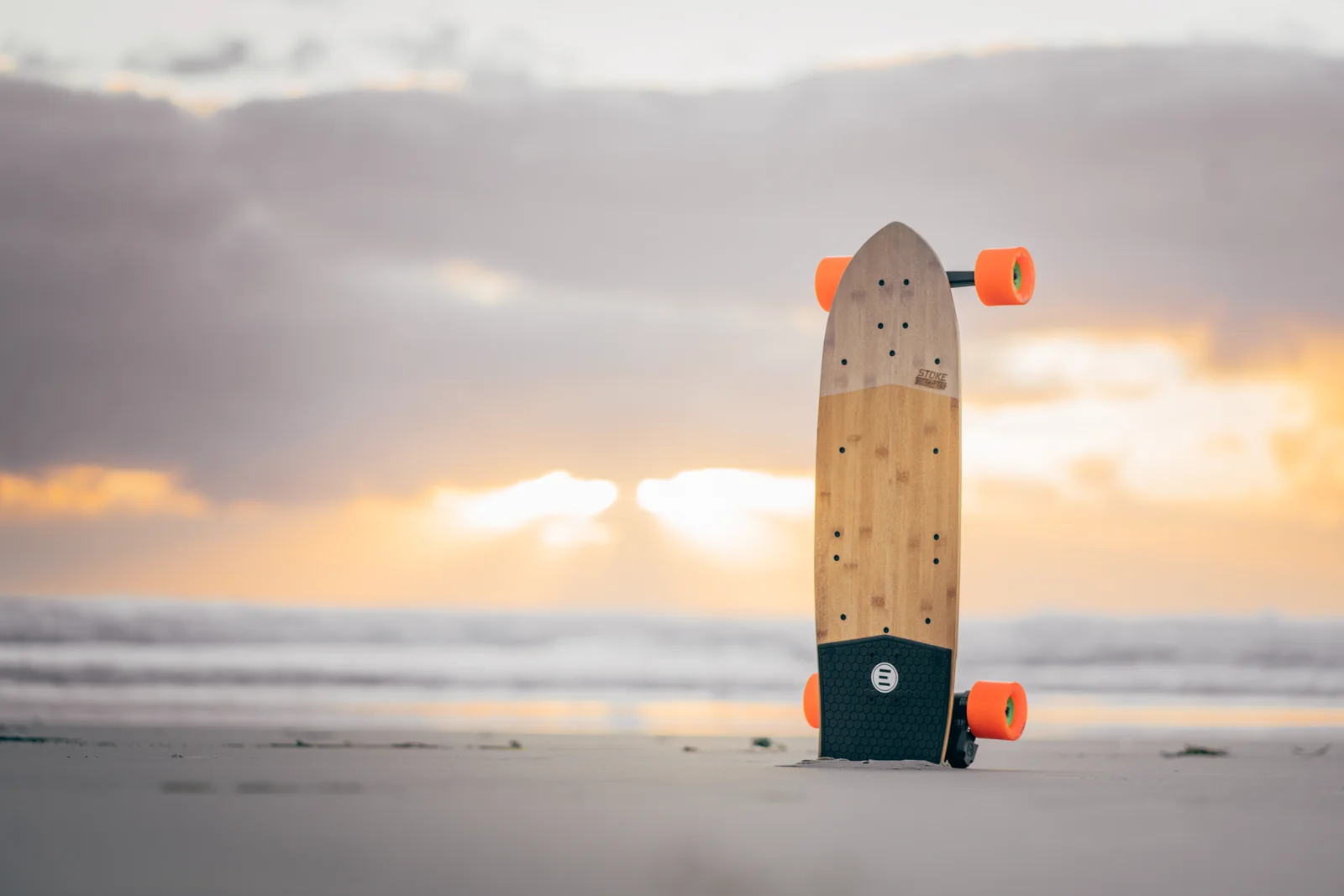
Evolve Stoke X
The Stoke X offers a shortboard-like feel: compact, lively, and highly responsive. It's particularly suited for quick changes of direction, tight turns, and short sequences.
Evolve Fusion
The Fusion offers a longboard-like feel: more length, stability, and amplitude. It's particularly enjoyable for carving long curves and maintaining a fluid ride.
The Stoke X prioritizes liveliness and short sequences. The Fusion provides more space, stability, and amplitude. In both cases, the Sport version allows you to fully enjoy the riding sensations on suitable private terrain.
Find your front foot without ruining a session
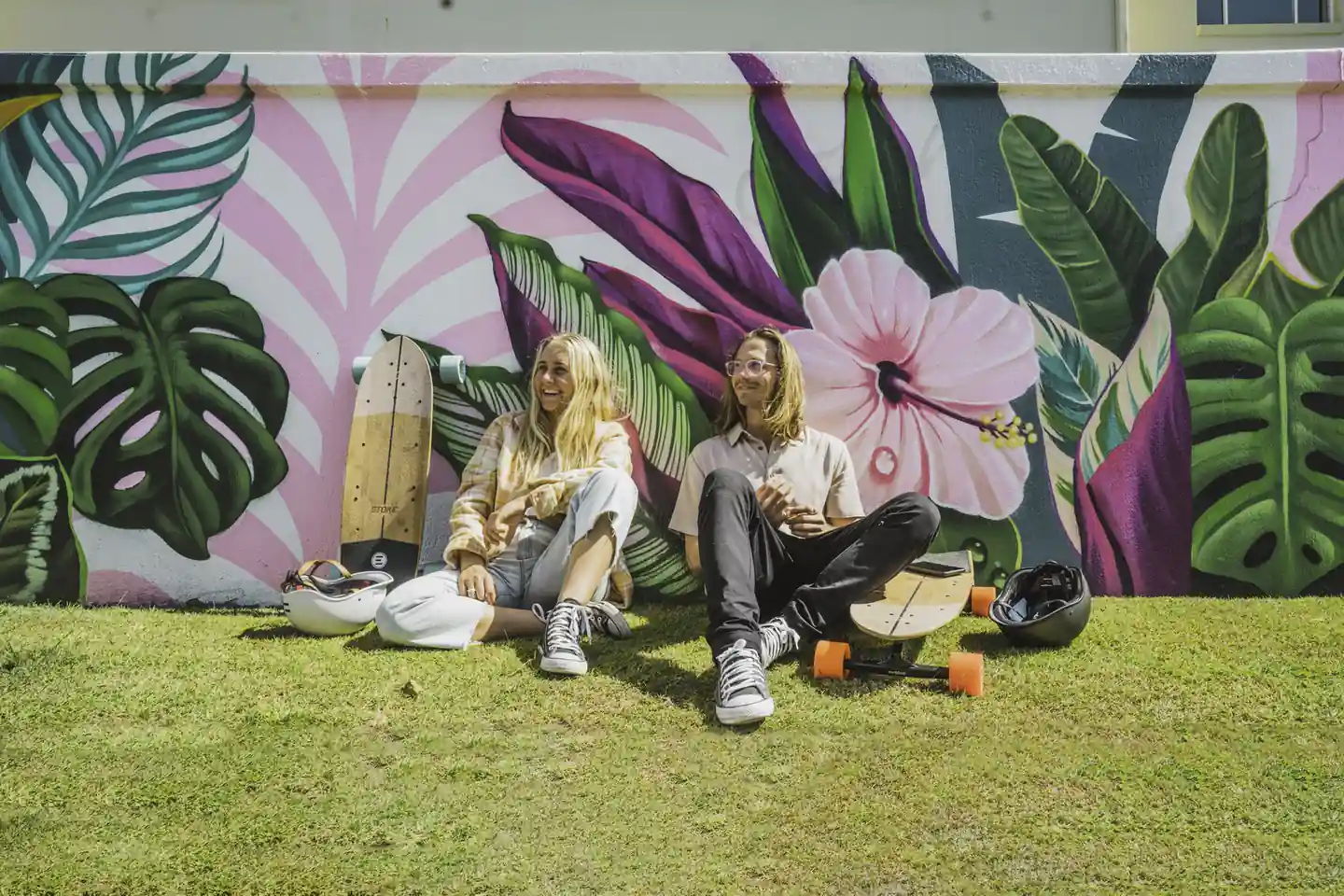
The skateboard makes it easy to test both stances. Ride very slowly, without trying to turn sharply. The stance that allows you to look far ahead, flex naturally, and react without feeling twisted or unbalanced often gives a good indication.
In regular, the left foot is in front. In goofy, the right foot is in front. There is no better stance: simply choose the one that feels most natural to you.
Maintain the freedom to glide without losing control
Gear up
- Properly fitted and adjusted helmet
- Gloves or wrist guards
- Knee and elbow pads
- Closed-toe shoes and protective clothing
Choose your terrain
- Dry, clean, and predictable surface
- Area closed to traffic for practice
- Sufficient visibility and no pedestrians nearby
- No sand, gravel, or leaves in curves
Maintain a Margin
- Start at a moderate speed before increasing commitment
- Brake early and always keep an exit route open
- Work on only one technical instruction at a time
- Use a Sport version only on suitable private terrain
The goal isn't to go as fast as possible. The right pace is one that leaves you enough margin to stay relaxed, observe your position, and correct your movement from one pass to the next.
Benefits and Limitations
What You Gain
- More repetitions between two swells
- Improved gaze placement in turns
- Active legs and a more stable torso
- Better frontside and backside flow
- The joy of gliding even when the ocean is flat
What to keep in mind
- Asphalt is less forgiving than falling in water
- Electric propulsion does not replicate pumping
- Wave reading can only be practiced in the ocean
- Repeated bad posture also becomes automatic
- Speed never guarantees better technique
Electric skateboarding and surfing: useful answers
Can electric skateboarding really improve surfing?
Yes, for gaze, shoulder rotation, posture, leg flexion, weight transfers, and reading a trajectory. However, it does not replicate the wave, paddling, or the take-off.
What is the difference between a surfskate and an electric skateboard for surf training?
The surfskate is closest to pumping thanks to its articulated front truck. The electric skateboard provides consistent speed and allows for repeating long carves, working on line, gaze, and fluidity without pushing.
Which electric skateboard should you choose to rediscover the feeling of surfing?
The Stoke X and Fusion are the two most suitable models: their flat, non-dropdown decks bring the riding position closer to that of a surfboard. The Stoke X is more agile in short turns, while the Fusion offers greater stability and range.
Goofy or regular: Can skateboarding help you choose your lead foot?
Yes. Riding slowly in both positions often helps identify which feels most natural. This test provides a useful reference, but it doesn't replace the sensations of a take-off and gliding on a wave.
How long do you need to train to see an effect in surfing?
As a guide, you can try two short sessions per week for several weeks, then adjust based on your fatigue and progress. The quality of repetitions matters more than speed or duration.
What protective gear should you wear for electric skateboarding?
A helmet is essential for our sport. We also recommend gloves or wrist guards, knee pads, elbow pads, closed-toe shoes, and covering clothing, especially during technical exercises.
The Evolve Europe Expertise
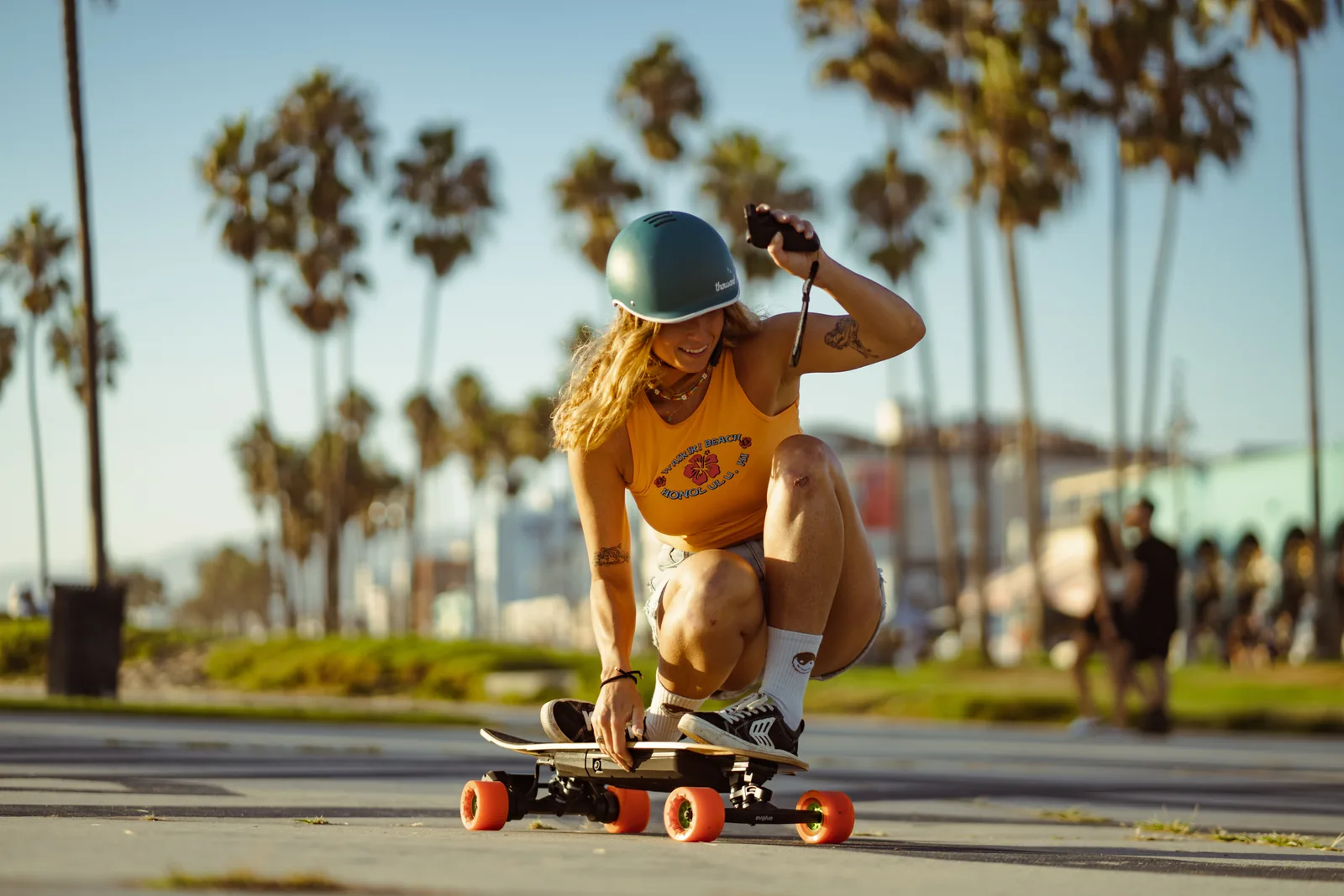
This article was prepared by the Evolve Europe team. Our advice is based on hands-on experience with the boards, rider feedback, and technical monitoring carried out by our workshop in France.
The goal is to explain what electric skateboarding can truly bring to surfing, without claiming to replace a session in the water.
The Verdict
When the ocean is flat, the ride doesn't stop. Electric skateboarding allows you to repeat your turns, refine your stance, and work on full-body engagement without losing speed with every push.
 Evolve